
Asphalt Driveway Paving Cost Factors in Northwest Arkansas
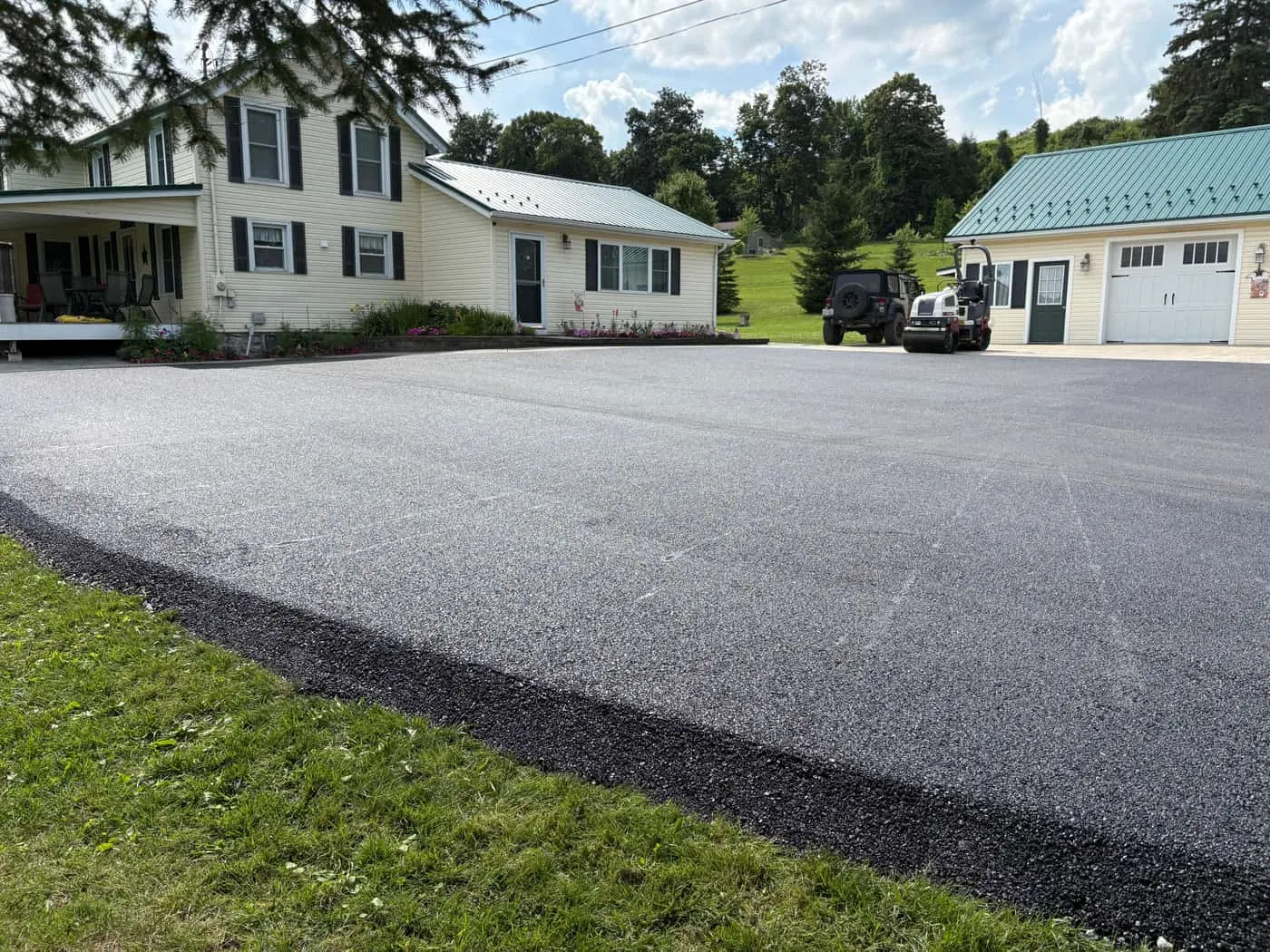
Asphalt driveway paving cost in Northwest Arkansas depends on the surface and the work under and around it. Old pavement that has to come out, the condition of the base, where water goes and how equipment reaches the site all change the scope. If you are planning driveway paving in Fayetteville or anywhere nearby, these are the details that make one estimate differ from another.
Site conditions that change the work
Start with what is on the ground now. If the old driveway is cracked and broken up, it usually has to be removed and hauled off before new work starts. If the old surface is fairly sound, a contractor may be able to leave it in place and overlay it, which is a different job with different labor. That second option is what asphalt resurfacing covers, and it may be suitable when what is underneath is still solid.
Base and drainage
The base is the compacted stone and soil layer the asphalt sits on. Asphalt is only as stable as that layer, so soft spots, ruts and areas that hold water may need to be dug out, rebuilt or regraded before paving. The more repair the base needs, the more time, material and equipment the job takes.
Drainage goes hand in hand with the base. A driveway that sheds water toward the street or a swale (a shallow ditch) behaves very differently from one that lets water sit against the edge. If your driveway needs regrading, a culvert adjustment or a way to move runoff off the pavement, that belongs in the scope and in the estimate.
Access and the driveway connection
Paving crews bring trucks, a paver (the machine that lays the asphalt mat) and a roller for compaction. A wide, open approach is simple. A tight turn, overhanging branches, a gate or a steep climb to the street can limit what equipment fits and slow the work. Tell your estimator about anything that narrows the approach, and mention where the driveway meets the road, since that connection often needs careful handling.
Driveway size, shape and use
Size is the obvious factor, but shape matters too. A long straight drive and a short wide parking pad can cover similar area and still involve different edge work, turning radii and grading. Curves, aprons, parking areas beside the house and a turnaround all add detail that a simple length times width figure misses.
Use can matter too. A driveway for two passenger cars may not need the same asphalt section as one that sees delivery trucks, a camper, a trailer or heavy equipment. If you expect heavier loads, say so up front so the thickness and base are planned for it. For a broader look at the service, see our overview of asphalt paving.
Transitions to clarify
- Where the new asphalt meets the garage slab or apron, and whether the height will match.
- How the driveway ties into the road edge or an existing paved section.
- Whether edges will be supported with compacted material or left to ravel.
- Whether any walkway, mailbox area or turnaround is part of the job.
Arkansas weather and paving conditions
Arkansas winters bring freeze-thaw cycles, where water gets into small cracks, freezes, expands and pries the pavement apart. That is why base preparation and water management matter alongside surface thickness. A driveway built over a wet or poorly compacted base may develop problems.
October and November usually bring cooler conditions and periods of rain across Arkansas. Cooler weather may be suitable for paving when conditions allow, but rain can push a start date, and scheduling may vary. Plan your walk-through early and ask how weather delays are handled.
Do not assume every lot behaves the same, whether it is in Fayetteville, Rogers or Bentonville. A driveway may climb, another may sit flat and hold water, and another may have a tight approach. If your yard is clay, water can drain slowly and the base deserves extra attention. Judge your own lot's drainage and access instead of relying on what a neighbor paid.
What to confirm before comparing estimates
Two estimates can look far apart because they cover different work. Before you compare, make sure each one spells out the same scope.
| Scope item | What to ask |
|---|---|
| Removal | Is old pavement being torn out and hauled away, or left in place? |
| Base work | Will soft spots be repaired and the base compacted before paving? |
| Drainage | Is any regrading or water control included? |
| Asphalt thickness | What thickness is proposed, and is it suited to how you use the driveway? |
| Edges and transitions | How will edges, the garage apron and the road connection be finished? |
Walk the driveway first
Before you ask anyone to quote, walk the driveway after a rain. Note where water stands, where the surface feels soft underfoot, and anything that limits access, like low branches, a narrow gate or a steep section. Share those notes with each contractor so every estimate starts from the same facts.
We offer a Free Estimate, and we are licensed & insured. Walk your driveway with your notes in hand, then reach out to request an estimate.
Common questions
What affects asphalt driveway paving cost?
The work under and around the surface, such as removal of old pavement, base repair and drainage work, can change the scope. Size, access and the vehicles you expect on the driveway also shape it, so ask for each item spelled out.
Is October or November a good time to pave a driveway in Northwest Arkansas?
It can be when conditions allow proper base preparation and compaction. Rain can move start dates, so ask early how a contractor handles weather delays.
Does driveway paving cost differ between Fayetteville, Rogers and Bentonville?
Lot conditions can affect the scope. Slope, drainage, access and the condition of the existing driveway can change the work.
Areas we serve
Our services
Have a question about your project? Call (479) 621-8261